The railroad syndicates were owned by “Old Money” back east. “Old Money” didn’t like all that virgin land in the west being owned by uppity peasants.
So the railroads demanded the government give them very wide “right-of-ways”. Thereby giving “Old Money” de facto control of the new territories. Going back to the Kansas-Nebraska Act of 1854.
The real “fun” began during Reconstruction, specifically from 1867 (the start of U.S. Army surplus selloffs from the Civil War) to 1876 (the actual establishment of the Indian reservation system under the Indian Appropriations Act of 1851).
The Indian nations received a massive influx of Union Army surplus arms, notably Spencer repeating carbines, the most extensively-produced metallic-cartridge arm of the war. Officially, they were provided via the Indian Bureau (later the Bureau of Indian Affairs) for “hunting”. Most actually ended up with the war bands.
During the Franco-Prussian War (1870-71), shipments of Spencers intended for the French Army were diverted to the “traders” along the U.S.-Canada border, who sold them to the war bands in the northern U.S. territories. The switches usually happened at Halifax, with the crates of Spencers sent north by railroad for loading aboard freight carriers being instead sent west by Canadian Pacific, and the ships loaded with crated Enfield muzzle-loaders.
To an inspector unfamiliar with either one, as most French inspectors were, a crate full of Spencers with big, thumb-cocking hammers, and a crate full of Enfields with big, thumb-cocking hammers looked remarkably alike if they just opened the lid, looked inside in the bad light of a dockside warehouse, and closed it again.
2. U.S. Army kills off the Indians, taking heavy losses in the process. (see “Little Big Horn”, “Fetterman massacre”, etc.)
3. Both sides having been heavily attrited, the railroads move in with their private armies and take control.
4. Land ends up in control of “Old Money”, as it should be, according to them.
The historical evidence is extensive. But most historians, who don’t “like guns” and have fully bought into the whole “oppressed indigenous peoples” story, can’t be bothered to look.
I’m a data geek. I looked, or rather, I found the data while looking for something else. Namely, tracking where all that Union Army hardware went after Appomattox.
As with most “history” of the American Frontier, when the facts didn’t match the legend, the legend got printed because it gave the historians the warm fuzzies about how righteous they were.
But what really happened was very different, and it wasn’t nice at all.


2 Comments
B Woodman,
Thank you for your support of DBD.
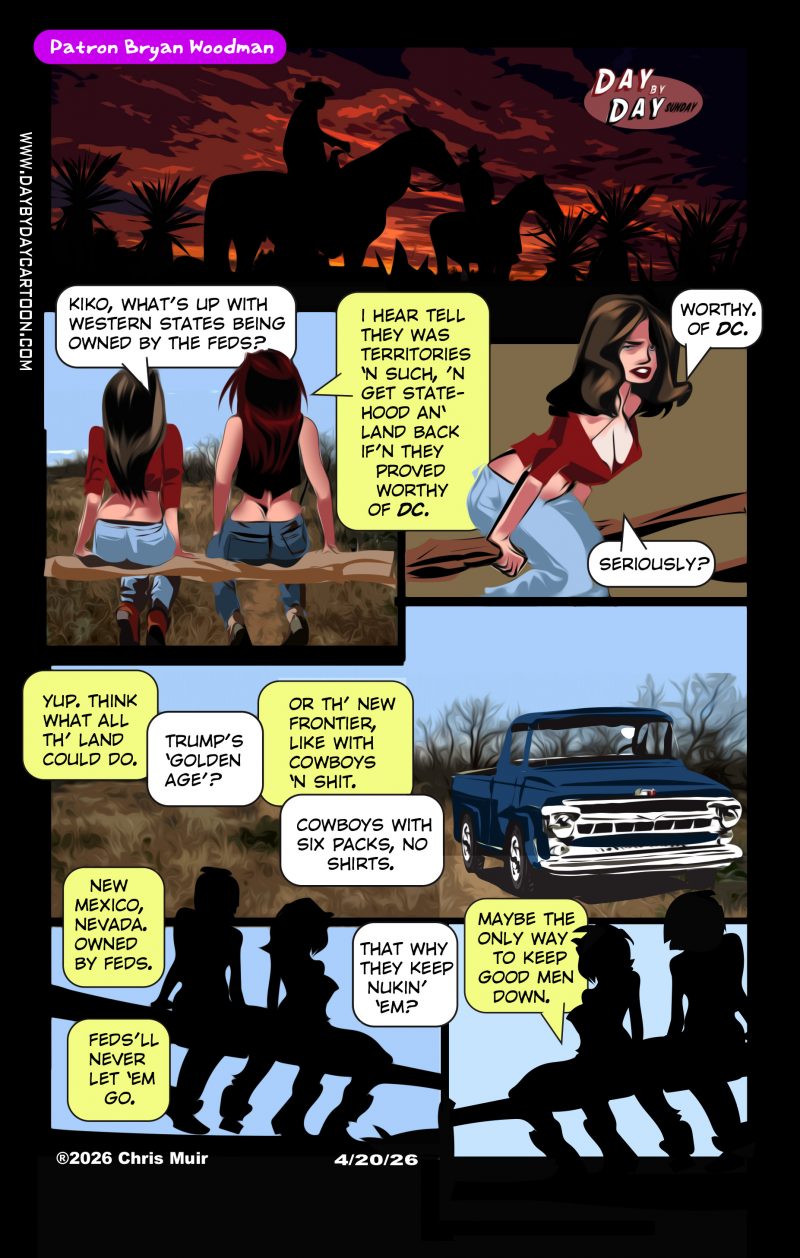
A new Homestead Act for all that Federal land out west?
I like it!
History lesson;
It all went back to the railroads.
The railroad syndicates were owned by “Old Money” back east. “Old Money” didn’t like all that virgin land in the west being owned by uppity peasants.
So the railroads demanded the government give them very wide “right-of-ways”. Thereby giving “Old Money” de facto control of the new territories. Going back to the Kansas-Nebraska Act of 1854.
The real “fun” began during Reconstruction, specifically from 1867 (the start of U.S. Army surplus selloffs from the Civil War) to 1876 (the actual establishment of the Indian reservation system under the Indian Appropriations Act of 1851).
The Indian nations received a massive influx of Union Army surplus arms, notably Spencer repeating carbines, the most extensively-produced metallic-cartridge arm of the war. Officially, they were provided via the Indian Bureau (later the Bureau of Indian Affairs) for “hunting”. Most actually ended up with the war bands.
During the Franco-Prussian War (1870-71), shipments of Spencers intended for the French Army were diverted to the “traders” along the U.S.-Canada border, who sold them to the war bands in the northern U.S. territories. The switches usually happened at Halifax, with the crates of Spencers sent north by railroad for loading aboard freight carriers being instead sent west by Canadian Pacific, and the ships loaded with crated Enfield muzzle-loaders.
To an inspector unfamiliar with either one, as most French inspectors were, a crate full of Spencers with big, thumb-cocking hammers, and a crate full of Enfields with big, thumb-cocking hammers looked remarkably alike if they just opened the lid, looked inside in the bad light of a dockside warehouse, and closed it again.
As to “Why?” it was simple and brutal;
1. Indians kill settlers. Preferably, exterminate them.
2. U.S. Army kills off the Indians, taking heavy losses in the process. (see “Little Big Horn”, “Fetterman massacre”, etc.)
3. Both sides having been heavily attrited, the railroads move in with their private armies and take control.
4. Land ends up in control of “Old Money”, as it should be, according to them.
The historical evidence is extensive. But most historians, who don’t “like guns” and have fully bought into the whole “oppressed indigenous peoples” story, can’t be bothered to look.
I’m a data geek. I looked, or rather, I found the data while looking for something else. Namely, tracking where all that Union Army hardware went after Appomattox.
As with most “history” of the American Frontier, when the facts didn’t match the legend, the legend got printed because it gave the historians the warm fuzzies about how righteous they were.
But what really happened was very different, and it wasn’t nice at all.
clear ether
eon